Space
Make the layout legible.
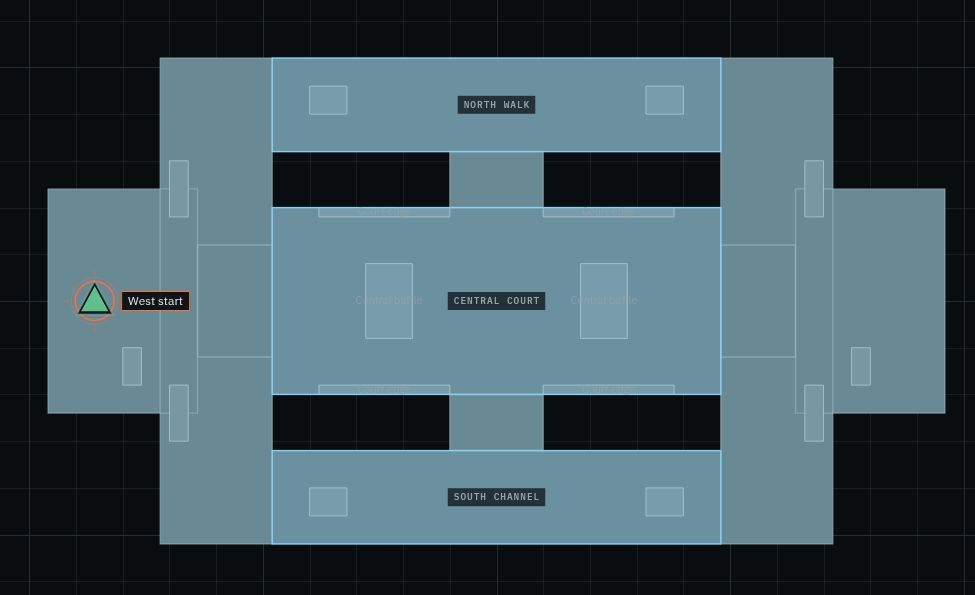
Block out floors, rooms and cover at a consistent scale. Keep height changes and traversal connections in the same plan. Mirror geometry when the design calls for it.
A Luyudo Softworks experiment · Top-down maps
Draw the space. Map the choices. Show what happens where. Give your team a level plan they can explore, before you build it in-engine.
Experimental, not a commercial product. Free to try—we encourage you to use it and share what you make.
Export a standalone .html viewer to share, or a .datum file to keep editing.
 Open the interactive map ↗
See the rooms, heights and connections.
Trace a route and inspect its gameplay beats.
Use saved views to see what the designer means.
A plan your team can read
A floor plan tells you where the rooms are. A Levelwright plan also carries the route, the encounter, the locked door and the decision that makes that room matter.
Block out floors, rooms and cover at a consistent scale. Keep height changes and traversal connections in the same plan. Mirror geometry when the design calls for it.
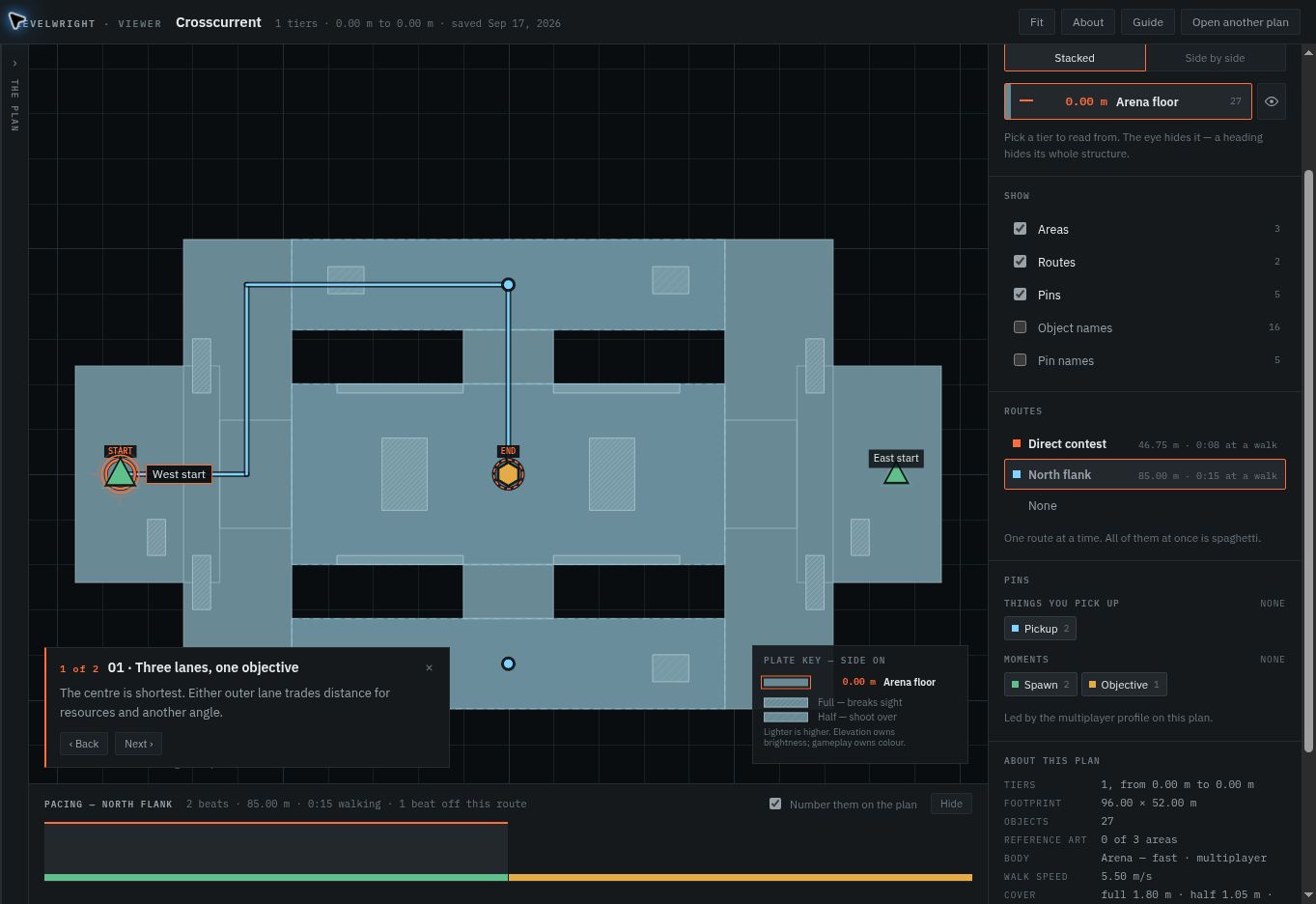
Make the direct approach and the flank easy to compare. For missions, distinguish required progression, an example playthrough and an optional detour.
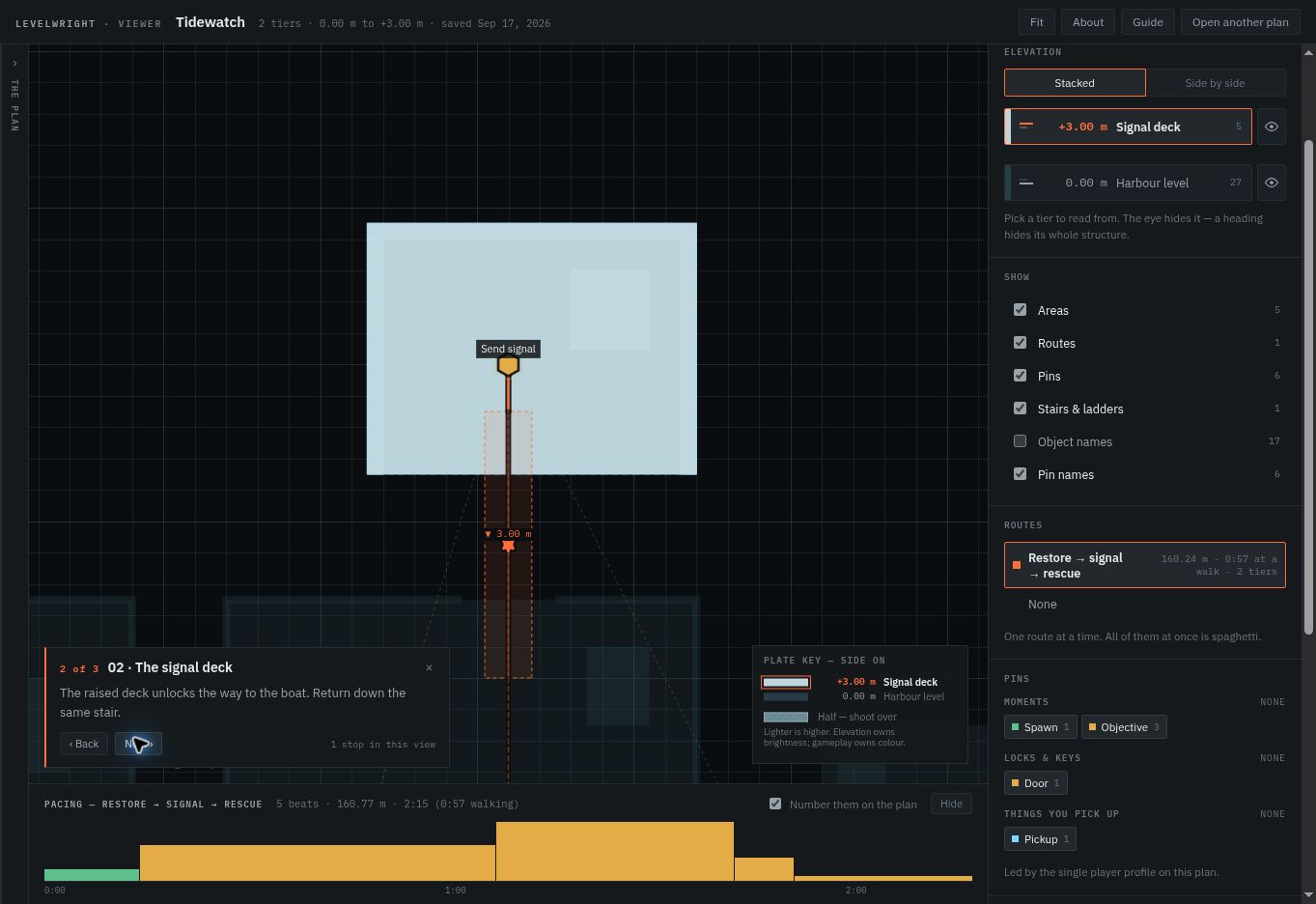
A named camera view, the right floor, a short caption. Give reviewers a useful place to start, then let them explore. Update the view as the layout changes.
Attach encounters, objectives and quiet moments to the map. Inspect authored intensity alongside estimated movement time. Give return visits their own notes and scores.
Explain what opens a door or advances an objective. Show whether it needs every prerequisite or any one of several alternatives.
Attach reference images to areas and keep them in the project. Export a read-only HTML Viewer so the recipient can explore the plan without opening the editor.
A planning tool for design conversations. Movement times depend on your chosen metrics; intensity is authored. Playtesting still happens in the game.
Original example maps
A focused mission and a small arena. Start with the idea, then follow the route and inspect the spaces that support it.
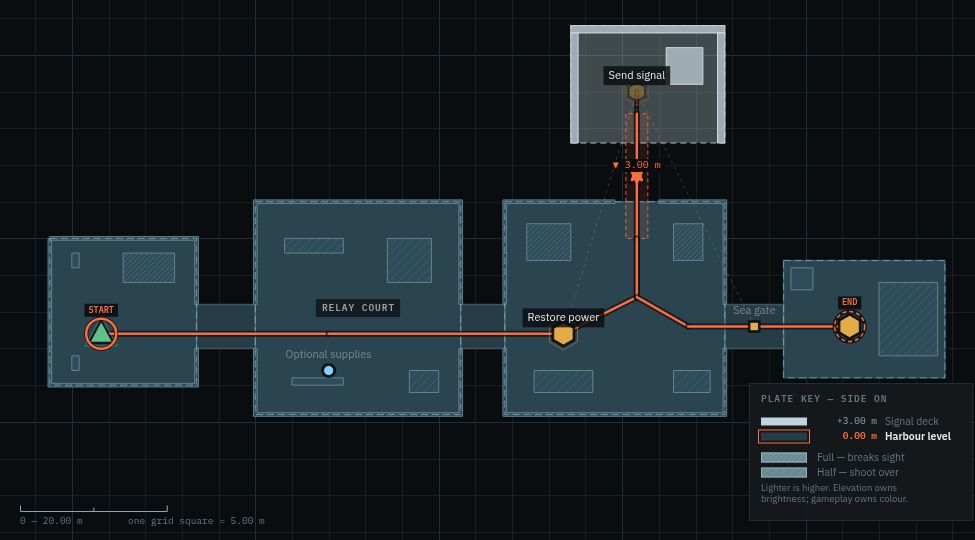
How do you make a visible destination feel earned? Restore the relay, climb to the signal and unlock the final approach.
Explore the mission ↗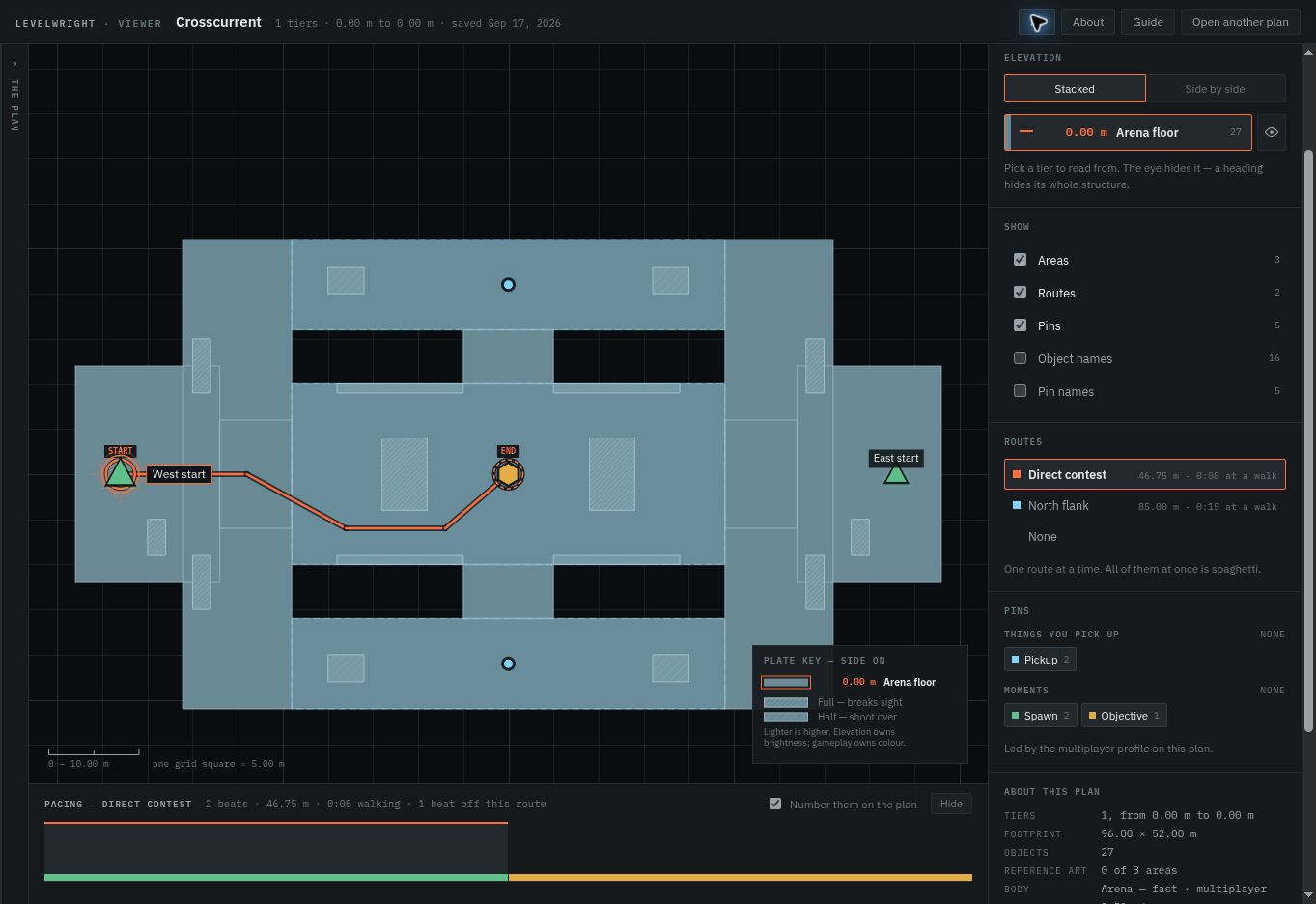
When is the longer route worth taking? Compare the direct contest with a resource-bearing flank into the central relay.
Explore the arena ↗From an idea to a useful review
State the objective and the choice you want the player to make.
Draw the floor plan, set elevations and connect the playable areas.
Add routes, pins, prerequisites and the beats you want to discuss.
Save the useful views. Export Viewer and send the HTML file.
For designers, students and their teams